

Ngorongoro Conservation Area
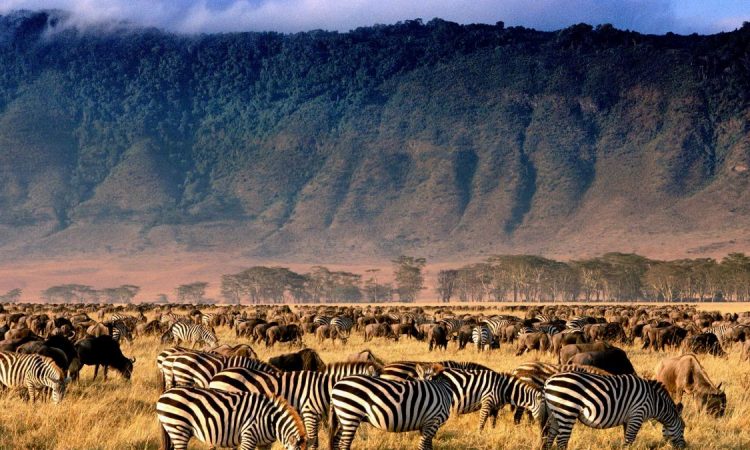
The Ngorongoro Conservation Area is one of Africa’s most remarkable landscapes, blending extraordinary wildlife with dramatic scenery and deep cultural heritage. At its heart lies the world-famous Ngorongoro Crater, a UNESCO World Heritage Site and the largest unbroken volcanic caldera on Earth. With fertile grasslands, swamps, and a soda lake on the crater floor, it sustains a dense concentration of wildlife all year round, making it a natural wonder of Tanzania’s northern safari circuit.
Imagine standing on the crater rim, gazing into a vast natural amphitheater where elephants, lions, zebras, and flamingos thrive side by side. This is Ngorongoro—where nature’s drama unfolds in one breathtaking stage.
Wildlife & Conservation
The crater floor is home to around 25,000 large animals, including black rhinos, lions, cheetahs, hyenas, elephants, and hippos. It is one of the best places in East Africa to see all of the Big Five in a single day. The surrounding highlands support Maasai communities who live in harmony with the land, herding cattle on the same pastures that feed wild herbivores. This coexistence makes Ngorongoro unique, blending wildlife conservation with human culture.
Natural Highlights
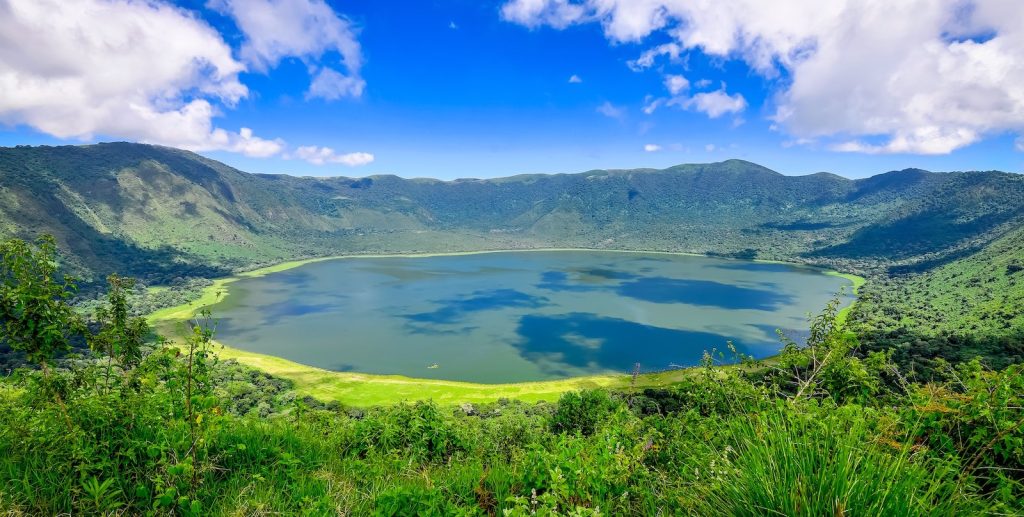
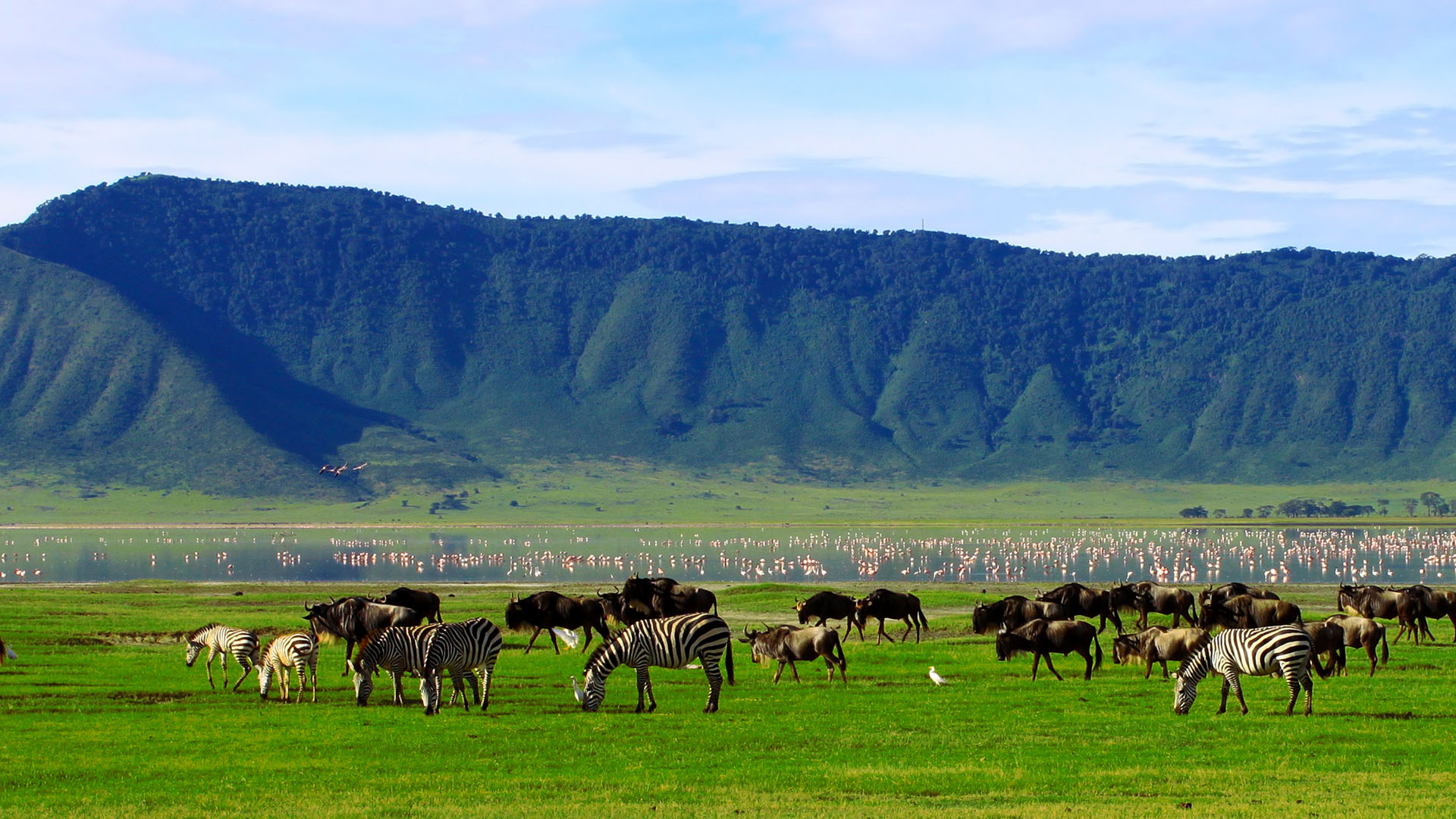
Formed over two million years ago from a massive volcanic eruption, the Ngorongoro Crater is about 20 kilometers wide and 600 meters deep. The lush crater floor hosts grasslands, acacia forests, freshwater streams, and Lake Magadi, which often shimmers pink with flamingos. From the rim, panoramic views stretch endlessly, offering some of the most awe-inspiring scenery in Africa.
Unique Safari Atmosphere
Unlike any other safari destination, Ngorongoro feels like a natural Eden, where diverse wildlife is concentrated within a dramatic volcanic bowl. The mix of landscapes—from rolling highland plateaus to the lush crater floor—creates a sense of wonder with each descent and ascent. Adding to this, the cultural encounters with Maasai herders provide a living link between people and nature, making every visit to Ngorongoro both visually and spiritually moving.